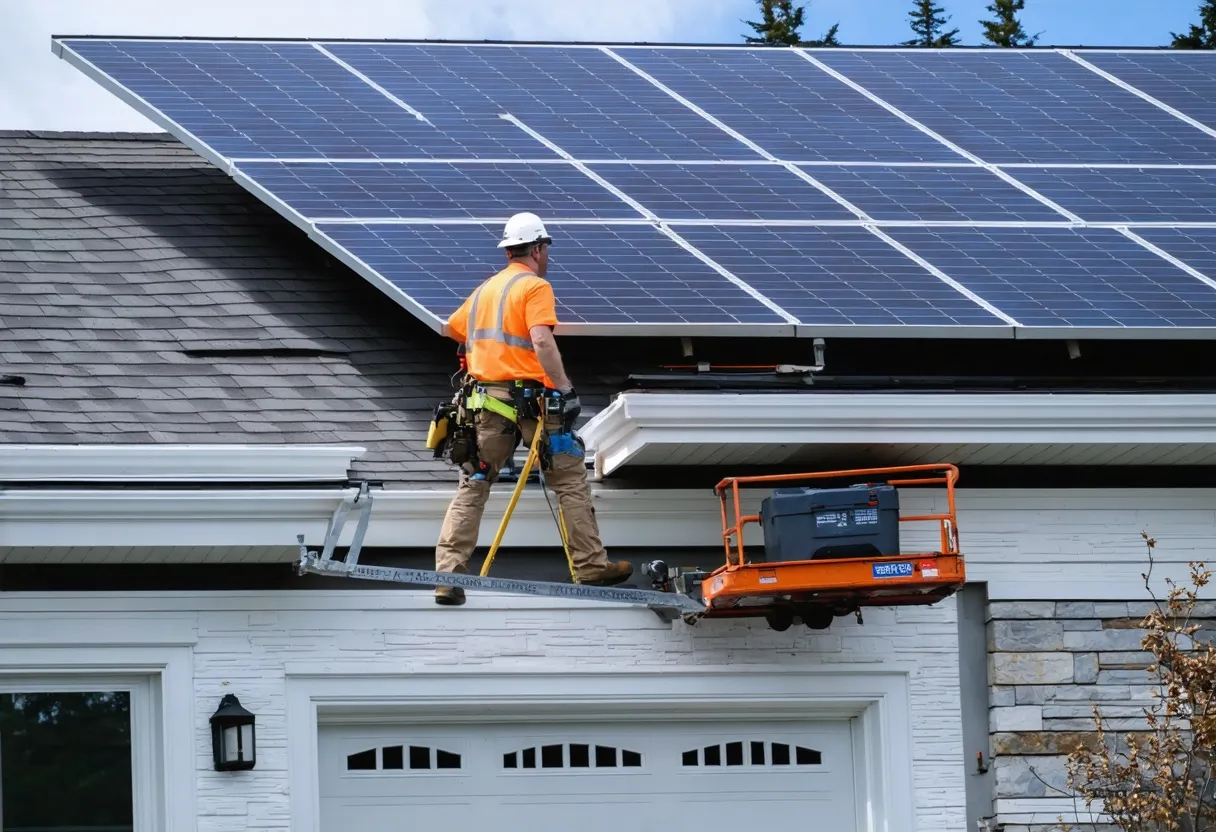
Ask a solar installer in Phoenix why a homeowner adds a battery, and the answer is usually about shaving a little more off a time-of-use bill. Ask the same question in Anchorage and the answer changes shape entirely: a battery here is what keeps your furnace blower, sump pump, and refrigerator running when a Chinook wind event or heavy wet snow takes a line down along the Hillside or Turnagain Arm — and it's what lets a system sized for June's nearly endless daylight still pull its weight once the sun is up for barely five and a half hours in late December. Solar battery storage in Anchorage isn't an accessory bolted onto a panel purchase after the fact. It's the single component that decides whether a home solar system here actually earns its keep once the Alaska winter daylight constraint sets in.
This page is built around that reality instead of a generic storage pitch. Below, we walk through which homes actually see a return on a battery, how sizing has to account for two very different Anchorage seasons instead of one average year, what the installation and Chugach Electric interconnection process involves, where the real cost variables live, and how to tell a quote that was actually engineered for this climate apart from one lifted from a warm-climate sales deck.
Signs a Home Battery Is Worth Adding in Anchorage
How Should Anchorage's Two Seasons Change Your Battery Sizing?
A rooftop array in Southcentral Alaska can generate more usable energy in the six weeks around summer solstice than it produces across November, December, and January combined. That lopsided curve is exactly why sizing a battery off a household's average daily usage — the default approach in more even-production climates — misses the point in Anchorage. A battery here has to answer two separate questions, and a quote that treats them as one number is usually the tell that sizing wasn't actually done for your house.
Summer Surplus vs. Winter Resilience Are Different Math Problems
The first question is about self-consumption during the high-production months: how much of your midnight-sun surplus you can use in your own home in the evening instead of exporting it under Chugach Electric's net metering terms. The second question is about outage resilience during a storm-driven power loss in the months when solar recharge might be minimal for a day or more — how many hours of critical-load coverage you actually need to get through the outage that matters, not an average day. A battery sized only for the first question can leave you with almost no reserve during a January outage. A battery sized only for the second is often larger, and more expensive, than most households actually need for day-to-day summer use. A properly engineered system is sized against both scenarios explicitly, and a good installer will walk you through that tradeoff rather than handing you a single generic capacity number.
Snow-Load Racking and Battery Capacity Are the Same Decision
Battery sizing and array design aren't separate line items in this climate — they're connected. Racking rated for local snow and wind loads keeps panels producing predictably through winter instead of shedding output unevenly under uncleared snow, and that predictability is exactly what tells an installer how much stored capacity you need to bridge a multi-day storm without over-buying capacity you'll rarely touch in July. An installer who sizes a battery off a warm-climate production curve and then bolts on standard racking will hand you a system that either can't get through a real winter outage, or that you significantly overpaid for relative to what it can actually deliver.
This is also why most Anchorage homeowners land on critical-load backup rather than whole-home coverage. Whole-home battery capacity sized to survive a multi-day winter outage at full household load gets expensive fast, while a critical-loads subpanel covering the circuits that actually matter — heat, refrigeration, a well or sump pump, key lighting and outlets — gets you through the outage that counts at a fraction of the cost and complexity.
What Actually Happens Between Signing and Energization
An installer walks through your electrical panel, recent utility bills, and any past outages tied to Hillside icing or Turnagain Arm wind events to establish the specific critical loads and outage duration your battery needs to cover, rather than assuming an average household profile.
Panel layout, snow-and-wind-rated racking, battery capacity, and hybrid inverter sizing are worked out together so winter output and battery reserve actually match, accounting for shading from low winter sun angles and neighboring structures.
The Municipality of Anchorage requires an electrical permit and Chugach Electric requires an approved interconnection agreement before a grid-tied system can legally operate, and this paperwork stage is typically the longest part of the entire timeline.
Racking and panels go up first, followed by the battery, inverter, and transfer switch or subpanel wiring, with a municipal electrical inspector signing off on the work before it can be energized.
Once Chugach Electric approves the interconnection, your meter is installed or reprogrammed and the battery is commissioned and configured with your chosen backup priorities.
What Actually Drives the Price of Battery Storage Up or Down?
Quotes for battery backup systems in this market vary widely, and the spread almost always traces back to a short list of factors rather than which brand name is printed on the box.
- Battery capacity and count — more stored kilowatt-hours costs more, and the right number should come from your critical-load list and outage history, not a generic "average home" assumption.
- Whole-home vs. critical-load backup — a full backup panel and larger battery bank costs meaningfully more than a critical-loads subpanel covering just the essentials.
- Electrical panel condition — older Anchorage housing stock sometimes needs panel or subpanel work to safely support a battery and transfer switch, which adds labor and permitting time.
- Racking and structural work — roofs needing reinforcement for snow-load-rated racking, or complex rooflines, extend installation time and cost.
- Thermal protection for the battery — if the planned battery location isn't conditioned space, insulated enclosure work may be needed to keep the battery within its charging temperature range through winter.
- Permitting and interconnection fees — municipal and Chugach Electric fees are relatively fixed but should appear as their own line item rather than folded into a lump sum.
Ask any installer to itemize these separately. It's the fastest way to compare two bids apples-to-apples when the equipment brands, battery chemistry, or backup scope differ.
On the incentive side, the federal Residential Clean Energy Credit currently applies to battery storage with at least 3 kWh of capacity, and it's the primary lever available here since Alaska's lack of a state income tax means there's no separate state credit layered on top. Locally, the Anchorage Solarize program has periodically run group-purchasing campaigns that pool multiple homeowners under one negotiated contractor rate — worth checking for an active enrollment window before signing with an installer, since timing a purchase against a Solarize cohort can lower the net cost meaningfully. Incentive terms shift year to year, so confirm current eligibility with your installer and get any incentive claim in writing rather than as a verbal estimate.
Engineered for Chugach Electric's Grid, Not a Sales Deck From Somewhere Warm
Every battery system we design is sized against your actual winter outage history and critical loads, matched to snow-load-rated racking, and filed through Chugach Electric's interconnection process the way it's meant to work in this city — not the way a warm-climate equipment brochure assumes.
Solar Battery Storage in Anchorage: Questions We Hear Most
It depends entirely on capacity and which circuits are backed up. A critical-loads system sized around your home's actual load list and outage history can typically carry heat, refrigeration, a well or sump pump, and key lighting through a multi-day outage with little solar recharge, while a whole-home system under full household load will draw down faster. This is why sizing should start with your winter outage history, not a generic estimate.
Lithium iron phosphate batteries can be damaged charging below freezing, so placement matters as much as the equipment itself. A conditioned garage, basement, or insulated enclosure paired with a battery management system that enforces cold-weather charge limits is a required part of an Alaska-appropriate install, not an optional upgrade.
It depends on how your export credits carry over between Chugach Electric's high-production summer months and the lean winter months, and how much you personally value outage resilience on top of any billing credit. Both are worth running the numbers on with an installer before deciding, since the right answer differs by household and consumption pattern.
Whole-home backup keeps every circuit powered and is sized for your full peak load, which requires more battery capacity and typically costs more. Critical-load backup routes power to a smaller subpanel covering essentials — heat, refrigeration, a well pump, some outlets and lighting — while non-essential circuits shed during an outage. Most Anchorage households choose critical-load backup because it covers the outage that actually matters without paying for capacity that sits unused most of the
Usually yes, as long as your existing inverter is compatible or is upgraded to a hybrid unit and your electrical panel can accommodate a transfer switch or subpanel. An installer will need to assess your current equipment and panel condition before confirming the exact retrofit scope.
The federal Residential Clean Energy Credit applies to battery storage with at least 3 kWh of capacity, and local group-purchasing programs like Anchorage Solarize periodically open enrollment windows that lower equipment and installation costs. Confirm current eligibility and any active program windows with your installer before signing a contract.
What Separates a Winter-Tested Battery Quote From a Copy-Paste One
Anchorage isn't short on visible proof that solar works in this climate — the Municipality of Anchorage's own rooftop array is a public, cold-climate system generating measurable output in this exact weather, worth pointing to any time an out-of-state salesperson tells you battery storage "doesn't make sense" this far north. The harder part is telling which installer has actually engineered a battery system for this climate versus one running a national script with Anchorage swapped into the city field.
What to Ask Before You Sign
- Does the company hold an active Alaska electrical contractor license and pull its own municipal permits, rather than subcontracting the work after the sale?
- Has the designer or installer completed battery systems — not just panel-only jobs — specifically in the Anchorage bowl, Eagle River, or surrounding Southcentral communities, where cold-climate thermal management is a different skill set than a warm-climate install?
- Can they show a system that's been through at least one Anchorage winter, ideally with real outage-performance detail, rather than a testimonial pulled from a landing page?
- Have they handled Chugach Electric's interconnection process enough times to keep the permitting timeline moving, rather than submitting a first-time application on your home?
We design and install battery backup systems across the Anchorage service area — from neighborhoods near Ingra Street through the Hillside and out toward Eagle River — around the two seasons this city actually has, sized against your real winter outage risk and matched to snow-load-rated racking rather than a warm-climate assumption. If you're ready for a straightforward, itemized quote built around your home's actual load list and outage history, reach out for a site assessment.
Request your free quote
See what a winter-ready system would look like on your home, with no pressure to move forward.
Get a system built for Anchorage winters
Reach out for a no-obligation quote sized to your roof and this climate.